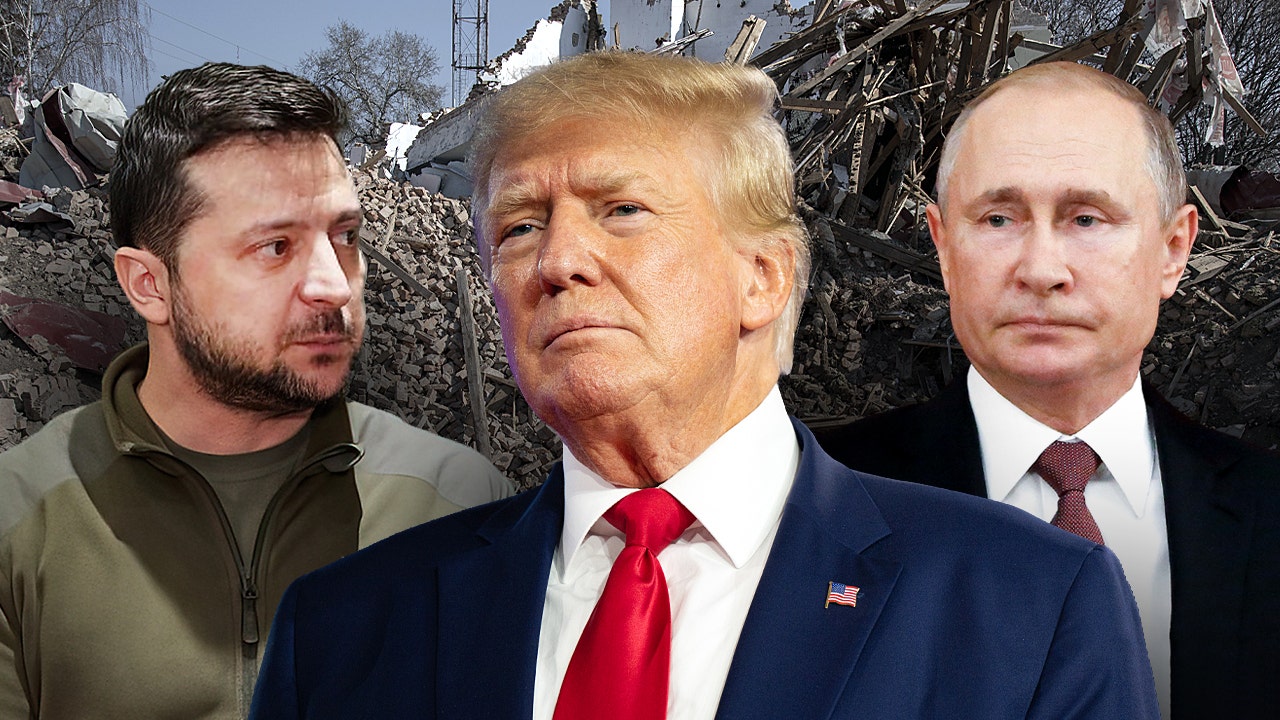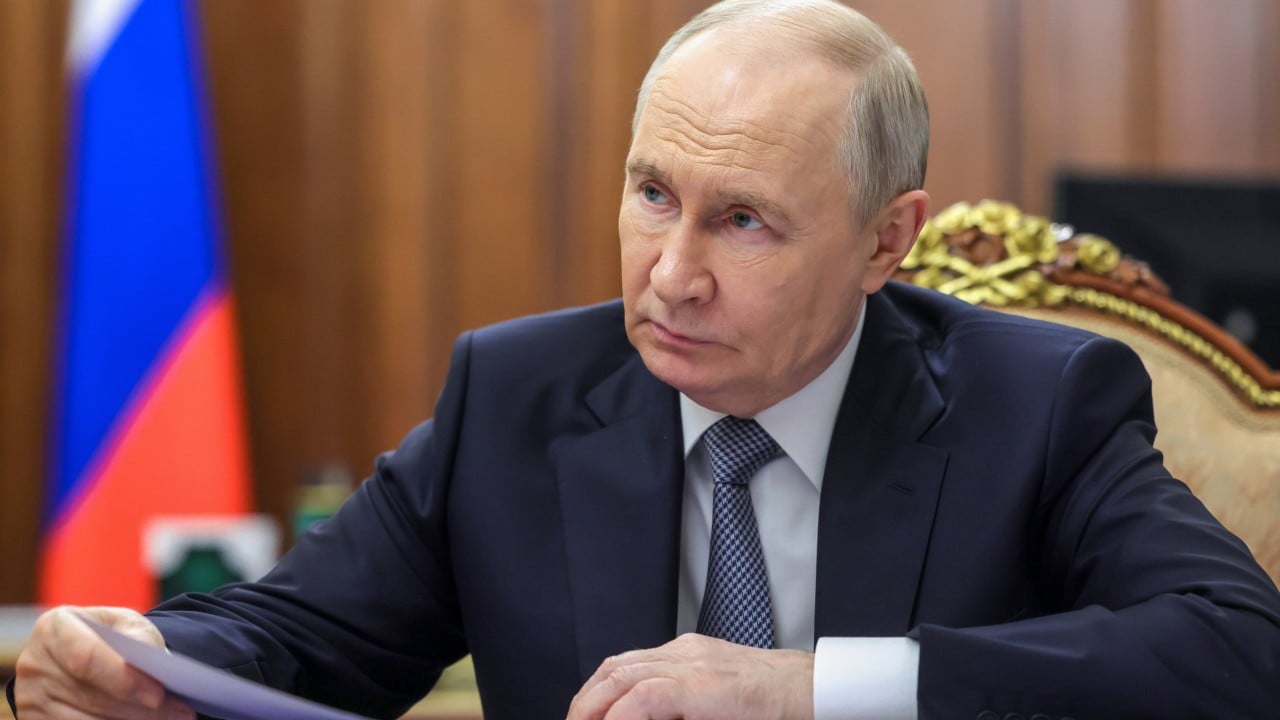
Mainstream foreign policy analysts love a predictable script. For months, the consensus narrative has been droning on about a grand geopolitical chess match: Washington manages a fragile "reset" with Beijing, prompting a nervous Vladimir Putin to rush to China for a "strategic refresh" to solidify a revisionist wartime alliance.
It sounds tidy. It makes for compelling television. It is also completely wrong.
The assumption that Beijing and Moscow are building an unbreakable, symmetrical axis to overthrow the Western international order misreads the core economic realities, historical grievances, and cold-blooded pragmatism driving both capitals. What the media covers as a deep strategic partnership is actually a highly transactional, deeply unequal relationship where China holds all the cards—and has no intention of playing them to save Russia from its own strategic blunders.
By viewing every diplomatic photo-op through the lens of a new Cold War, Western commentators are missing the real story. China is not building an alliance; it is managing a vassal state while keeping its multi-trillion-dollar economic access to the West completely intact.
The Asymmetry the Experts Ignore
Look closely at the economic data, not the handshakes. The narrative of an equal "no-limits" partnership falls apart the moment you examine the trade balance sheet.
Russia’s economy, hollowed out by sanctions and war mobilization, has effectively become a resource colony for the Chinese industrial machine. Moscow sells its crude oil, liquefied natural gas (LNG), and coal to Beijing at steep, humiliating discounts because it has nowhere else to go. China, meanwhile, exports consumer electronics, automobiles, and industrial machinery back to Russia at premium rates.
This is not a strategic alliance of peers. It is a predatory commercial relationship.
Consider the Power of Siberia 2 pipeline project. Mainstream outlets routinely point to this proposed gas mega-project as proof of tightening integration. In reality, negotiation over the pipeline has dragged on for years because Beijing refuses to pay anywhere near the price Moscow wants, demanding instead that Russia foot the bill for construction while selling the gas at heavily subsidized domestic Chinese rates. Xi Jinping knows Putin has zero leverage, and he is treating him accordingly.
+-------------------------------------------------------------+
|               THE PREDICTABLE ILLUSION VS. REALITY          |
+-------------------------------------------------------------+
| Mainstream Consensus         | Cold Economic Reality        |
+------------------------------+------------------------------+
| An equal partnership of peers| A heavily lopsided vassalage |
| Unconditional military unity | Calculated economic caution  |
| Joint anti-Western crusade   | China prioritizing US trade  |
+------------------------------+------------------------------+
Dismantling the "People Also Ask" Delusions
The public debate surrounding this relationship is warped by flawed premises. Let us dismantle the most common questions cluttering the geopolitical discourse.
Will China provide direct military aid to Russia?
This question misunderstands China’s entire economic structure. Beijing’s economic survival depends on maintaining access to consumer markets in the United States and the European Union. In 2025, China's total bilateral trade with the US and EU exceeded $1.5 trillion. Its total trade with Russia, while growing, remains a fraction of that amount.
Xi Jinping is a nationalist, but he is not suicidal. Triggering massive, sweeping secondary sanctions from the West to send artillery shells to Moscow would wreck the Chinese economy at a time when domestic real estate deflation and youth unemployment are already threatening internal stability. China will happily sell dual-use technology, microchips, and golf carts to Russia, but it will stop short of crossing the red lines that would cut off its access to Western capital.
Does the Sino-Russian partnership threaten global stability?
It creates friction, but not in the way alarmists think. The real threat is not a coordinated, two-front global war planned by Beijing and Moscow. The threat is the instability caused by Russia’s desperation.
As Moscow grows more isolated, it is forced to trade sensitive military technology—such as advanced submarine silencing techniques, missile telemetry, and aviation tech—to actor states like North Korea and Iran in exchange for immediate ammunition supplies. This behavior actively frustrates Beijing, which prefers predictable, managed regional stability where Chinese economic coercion can work without the risk of nuclear escalation or sudden regional wars.
The Historical Amnesia of Western Analysts
During my time analyzing sovereign risk and supply chain dependencies in East Asia, I watched Western boardrooms panic over the prospect of a unified Eurasian bloc. They consistently made the mistake of treating the current diplomatic theater as a permanent state of affairs. They forget that geography is stubborn and history has a long memory.
Beijing and Moscow share a 2,600-mile border and a history stained by mistrust. The Sino-Soviet split of the 1960s escalated into actual military skirmishes along the Ussuri River. Chinese nationalists have not forgotten the Treaty of Aigun or the Convention of Peking—the "unequal treaties" through which a weakening Qing Dynasty was forced to cede over 350,000 square miles of territory (including Vladivostok) to the Russian Empire.
Today, Russia's Far East is a demographic vacuum: vast, resource-rich, and populated by barely 6 million dwindling residents. Right across the border sit over 100 million people in China’s northeastern provinces. As Russia grows weaker, hollower, and more dependent on Chinese cash, Beijing’s long-term leverage over these regions grows exponentially. Putin is trading Russia's long-term sovereignty for short-term survival. To call this a "strategic refresh" is an insult to strategy.
Beijing's Real Play: The Balancing Act
The Western media frequently treats foreign policy as a zero-sum binary: you are either with Washington or you are with Moscow. China operates on an entirely different plane of self-interest.
Beijing’s actual objective during any high-profile summit with Russia is twofold:
- Strategic Depth without Cost: Keep Russia stable enough so that it remains a buffer against Western influence and continues to tie down American military attention in Europe, preventing a total pivot of US naval assets to the Indo-Pacific.
- Hedging the West: Use the appearance of a powerful eastern bloc as a bargaining chip when negotiating trade terms, tariffs, and technology access with Washington and Brussels.
The moment Russia becomes a net liability rather than an asset, Beijing's warmth will evaporate. We saw a preview of this when Chinese state banks quietly restricted financing for Russian commodities immediately following the implementation of Western secondary sanctions, prioritizing their access to the SWIFT international payment system over ideological solidarity with Moscow.
The Flawed Advice Driving Western Policy
Western policymakers are reacting to the optics of the Sino-Russian relationship rather than its mechanics. Driving both countries closer together through blanket, uncalibrated pressure is a failure of statecraft.
Instead of trying to force China to completely abandon Russia—a diplomatic impossibility that only forces Beijing to double down on its defensive posturing—the West should be driving wedges into the natural fault lines of this partnership.
Acknowledge China's role as the dominant partner. Highlight Moscow’s growing subservience to Chinese economic interests. Make it clear to the global south that Russia is no longer a superpower, but a junior partner in a transaction where it sells its sovereignty by the barrel.
Stop treating Putin’s trips to Beijing as a sign of strength. A leader of a supposedly great power traveling cap-in-hand to secure economic lifelines from a neighbor that eyes his territory with historical resentment is not an act of strategic defiance. It is a confession of weakness.
The grand Eurasian alliance is a paper tiger built on mutual convenience and mutual distrust. Treat it like one.
Stop reading the communiqués. Watch the cash flow. Follow the leverage.