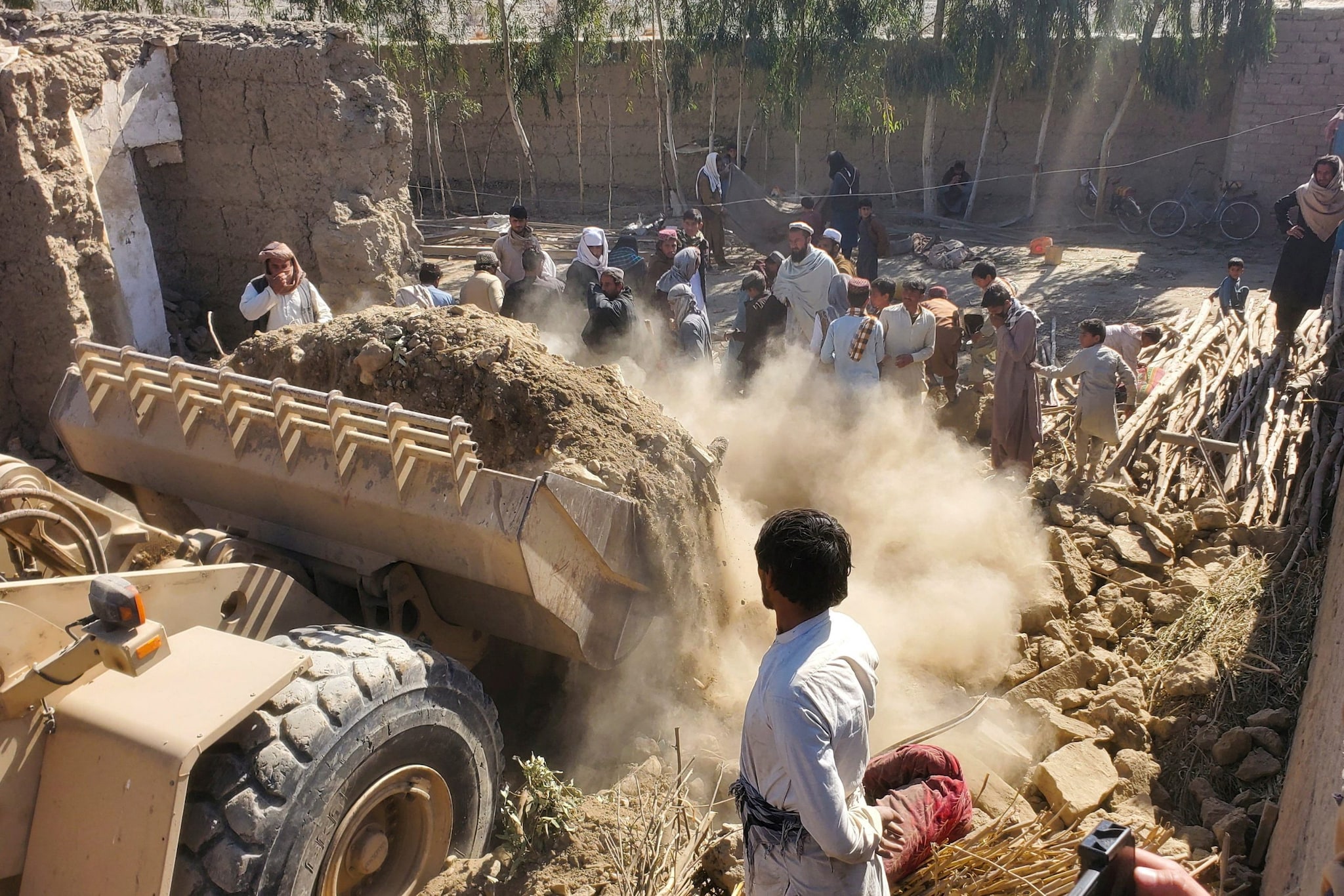
China has stepped into the fray to broker a fragile truce between Afghanistan and Pakistan, hosting a series of talks in Beijing that officials from the Taliban-led government describe as constructive. These discussions target a volatile border crisis characterized by frequent skirmishes and a complete breakdown in diplomatic trust. While the public messaging suggests progress, the reality on the ground is a complex standoff over cross-border militancy that neither Kabul nor Islamabad seems willing or able to resolve alone. China’s primary goal is regional stability to protect its massive infrastructure investments, yet the deep-seated grievances between the two neighbors remain largely untouched by the diplomatic pleasantries in Beijing.
A Marriage of Necessity Under the Chinese Eye
The relationship between Afghanistan and Pakistan has soured to a level not seen in decades. This is a bitter irony. For years, Islamabad provided the strategic depth and sanctuary that allowed the Taliban to survive twenty years of American occupation. Now, the roles have reversed. Pakistan finds itself on the receiving end of a persistent insurgency, which it claims is directed from Afghan soil. The Taliban, meanwhile, view Pakistan’s recent mass deportation of Afghan refugees and its tightening of border controls as a betrayal of Islamic solidarity and a direct attack on their struggling economy.
Beijing is not acting out of pure altruism. The Chinese leadership is pragmatic. They see the instability in the Durrand Line region as a direct threat to the China-Pakistan Economic Corridor (CPEC) and their long-term interests in Afghan mineral wealth. If the fighting escalates, the risk of militancy spilling over into China’s own borders becomes a mathematical certainty rather than a distant fear. By hosting these talks, China is attempting to fill the vacuum left by Western powers, positioning itself as the only adult in the room capable of bringing two recalcitrant parties to the table.
The Tehrik e Taliban Pakistan Factor
The heart of the dispute is the Tehrik-e-Taliban Pakistan (TTP). Islamabad demands that the Afghan Taliban arrest and hand over TTP leaders, whom they accuse of orchestrating a wave of suicide bombings and police station raids across Pakistan. The Taliban’s response has been a consistent, albeit frustrating, denial. They maintain that they do not allow their territory to be used against any neighbor. This is a diplomatic shield that carries little weight in the corridors of power in Islamabad.
In private, the situation is even more tangled. The Afghan Taliban are ideologically linked to the TTP. Asking them to move against their Pakistani cousins is asking them to violate their own internal code of loyalty. Instead of a crackdown, the Kabul administration has often suggested "reconciliation" or moving the TTP fighters further away from the border. Pakistan sees this as a stalling tactic. Every time a new attack occurs in Khyber Pakhtunkhwa, the pressure on the Pakistani military to take unilateral action increases. We have already seen Pakistani airstrikes inside Afghan territory, a move that brought the two nations to the brink of open war.
Economic Warfare as a Diplomatic Tool
While the soldiers exchange fire at the Torkham and Chaman border crossings, a quieter and perhaps more devastating conflict is being fought through trade. Pakistan has historically been Afghanistan’s primary gateway to the sea. In recent months, that gate has been slammed shut repeatedly. New visa requirements for truck drivers, increased tariffs, and the sudden closure of transit routes have left thousands of tons of Afghan fruit to rot in the heat.
This is leverage, plain and simple. Islamabad is using its geographic advantage to squeeze the Taliban’s already thin wallet. The Taliban have responded by looking North and West, attempting to build stronger ties with Iran and Central Asian republics to bypass Pakistani routes. However, geography is a stubborn opponent. The infrastructure to the north is not yet ready to handle the volume of trade that the Pakistani ports offer. This economic strangulation makes the Chinese mediation even more critical for Kabul. They need the border open to survive, but they are unwilling to pay the price Islamabad demands: the head of the TTP.
The Limits of Beijing’s Influence
China can provide the venue, the tea, and the polite press releases, but it cannot fix the fundamental lack of trust. The "constructive" nature of the talks likely refers to the fact that both sides agreed to keep talking rather than any breakthrough on the TTP or border demarcation. Beijing’s leverage is significant, but it has its limits. They can offer investment and diplomatic recognition, but they cannot force the Taliban to risk an internal mutiny by turning on their militant allies.
Furthermore, there is the issue of the Durand Line itself. No Afghan government, including the current one, has ever formally recognized this British-era border. To the Taliban, the border is a colonial relic that splits the Pashtun heartland. To Pakistan, it is a sovereign boundary that must be fenced and monitored. This is a fundamental disagreement over the very map of the region. China is unlikely to weigh in on border disputes that have lasted over a century; they want a quiet neighborhood, not a settled historical debate.
The Role of Local Power Brokers
Beyond the high-level meetings in Beijing, local dynamics often dictate the pace of conflict. Tribal elders on both sides of the border have historically played a role in de-escalating tensions. However, the centralization of power in Kabul and the increased militarization of the border by Pakistan have sidelined these traditional mediators. The conflict is becoming increasingly professionalized and, by extension, harder to solve through traditional consensus-building.
The Pakistani military, facing internal political pressure and a crumbling economy, needs a win. If they cannot secure the border through diplomacy, the temptation to use more aggressive cross-border strikes remains high. Such moves would immediately undo any progress made in China. The Taliban, for their part, are dealing with an internal rift between pragmatists who want international recognition and hardliners who view any concession to "un-Islamic" demands as a failure of their revolution.
Security Guarantees vs. Reality
The Beijing talks reportedly touched on a joint security mechanism. This would theoretically involve shared intelligence and coordinated patrols. On paper, it sounds like a solution. In practice, it is a nightmare. Sharing intelligence requires a level of trust that simply does not exist. If Islamabad provides coordinates for a TTP camp, would the Taliban use that information to launch a raid, or would they use it to warn their allies to move? Conversely, the Taliban fear that any Pakistani security presence near the border is merely a precursor to permanent annexation of disputed territories.
A Cycle of Short Term Fixes
The history of the region is littered with "constructive" talks that led nowhere. We saw this during the various "Heart of Asia" conferences and the numerous quadrilateral coordination groups. Each time, a temporary ceasefire or a cooling of rhetoric was mistaken for a lasting peace. The fundamental drivers—ideological kinship, territorial disputes, and the use of proxies—remain the same.
China’s entry into this mix adds a new layer of financial incentive, but money cannot buy security in a region where identity and religious conviction are the primary currencies. The Afghan government’s praise for the Beijing talks should be seen for what it is: a desperate need for a powerful patron and a temporary reprieve from Pakistani pressure.
The real test will not be the joint statement issued in Mandarin and Pashto. It will be the activity at the border over the next three months. If the IED attacks in Pakistan continue and the border crossings remain closed, the Beijing talks will be remembered as another failed exercise in "neighborhood diplomacy." The Taliban are betting that they can outlast Pakistan’s patience. Pakistan is betting that it can starve the Taliban into submission. Both are dangerous gambles.
The current situation is a stalemate that favors the status quo of low-level conflict. For the Taliban, maintaining the TTP as a lever of influence is more valuable than the trade benefits of a quiet border. For the Pakistani military, the "Afghan threat" provides a necessary external enemy during a period of intense domestic turmoil. China, despite its vast resources and strategic patience, is finding that the "Great Game" is played by rules that don't always follow the logic of a balance sheet.
If these talks are to evolve from "constructive" to "transformative," Islamabad must accept that the border will never be fully sealed, and Kabul must accept that its neighbor will not tolerate a permanent insurgent base on its doorstep. Anything less is just a change of scenery for the same old war.
Stop looking at the handshakes in Beijing and start watching the movement of convoys at the border. When the trucks move without being stopped for weeks on end, and the rhetoric from the mosques in Peshawar and Kandahar softens, only then can we talk about peace. Until then, it is merely a strategic pause in a very long game of survival.