The floor of the Malmö Arena didn't just vibrate; it throbbed with a physical weight that felt like a heartbeat. In the center of the chaos stood a fan named Marco. He had saved for eight months, flying from Bari to Sweden, draped in a flag that represented a country currently embroiled in a geopolitical firestorm. Around him, the air was thick with the scent of expensive pyrotechnics and the sharp, metallic tang of nervous sweat.
This is the reality of the Eurovision Song Contest. It is rarely about the music.
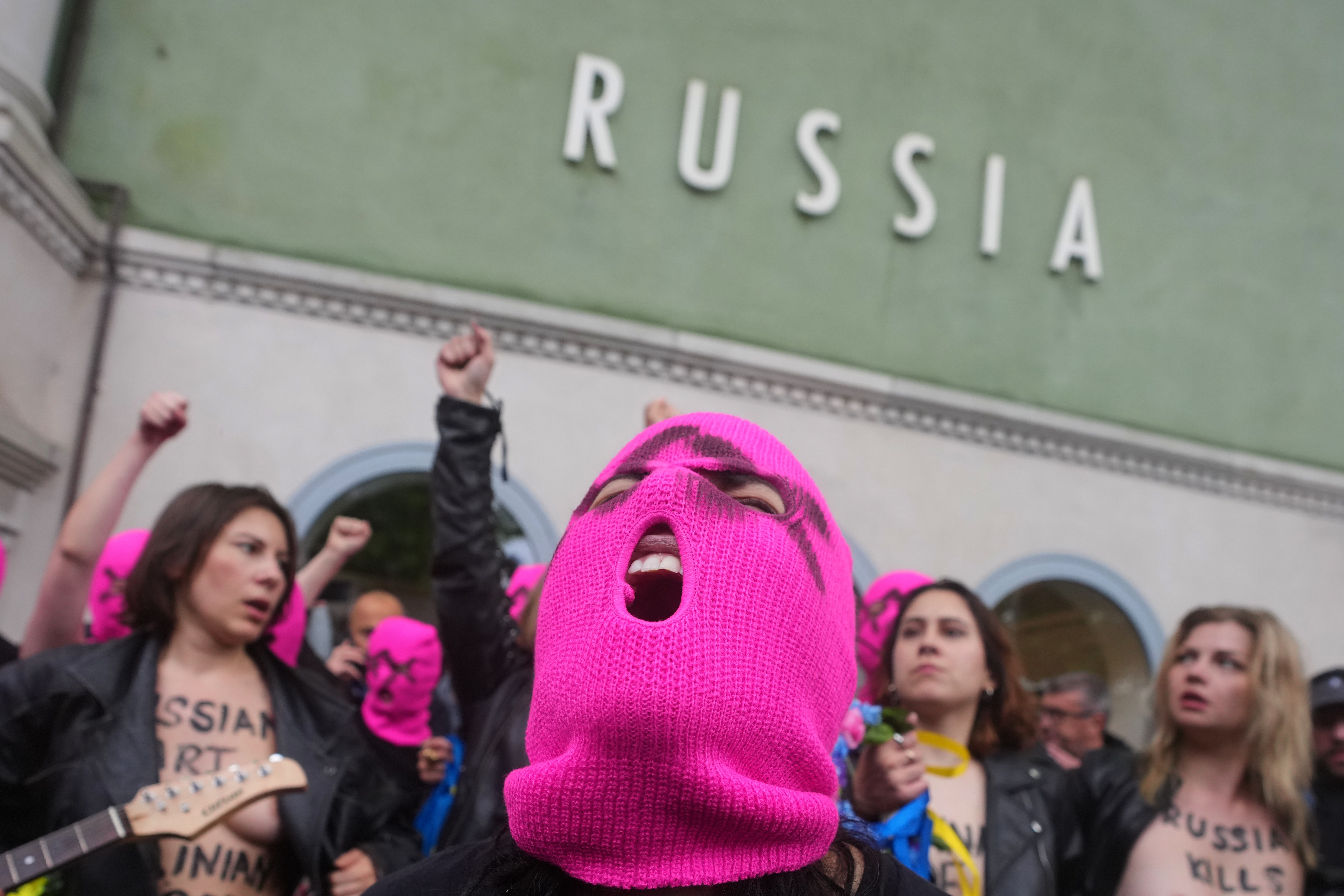
If you look at the headlines, you see a disaster. You see disqualifications, backstage protests, and a digital war raging in the comment sections of every social media platform. Critics claim the "glitter is fading" or that the "politics have finally broken the machine." They are wrong. They are looking at the smoke and missing the fire.
Eurovision has always been a mirror, and right now, the world is shattered.
The Myth of the Neutral Stage
For decades, the European Broadcasting Union (EBU) has clung to a specific, almost holy directive: Eurovision is non-political. It is a sterile laboratory for pop music where the outside world is supposed to melt away.
But humans are not sterile.
Consider a hypothetical contestant—let's call her Eleni. She has spent three years writing a song about her grandmother’s village, a place that no longer exists because of a border shift forty years ago. When she steps onto that stage, she isn't just a singer. She is a walking, breathing historical claim. The EBU can scrub the lyrics of "political" keywords, but they cannot scrub the memory from Eleni's eyes.
The 2024 cycle proved that the "neutrality" shield has finally cracked. When Joost Klein of the Netherlands was disqualified following an "incident" behind the scenes, the vacuum of information was immediately filled by vitriol. When Israel’s Eden Golan performed amidst a chorus of boos so loud the broadcasters had to use anti-booing technology to mask the sound for TV viewers, the illusion of a "united" Europe vanished.
We saw the machinery exposed. We saw that the contest isn't a bridge over troubled waters; it is a raft made of sequins, held together by duct tape, tossed about by the very same waves that crash against our borders every day.
Why We Refuse to Look Away
You would think the drama would drive people away. Logic suggests that a fan base tired of controversy would simply change the channel. Yet, the numbers tell a different story. Ratings remain astronomical. The engagement is frantic.
The secret lies in the stakes.
In a world where we are increasingly siloed by algorithms, Eurovision is the last Great campfire. It is the one time a year when the baker in Dublin, the tech executive in Tallinn, and the student in Madrid are all looking at the same ridiculous, sublime, and often confusing spectacle at the exact same moment.
We stay because the mess is authentic. There is something deeply human about watching a performer try to hit a high note while their country is being debated in the halls of the UN. It shouldn't work. It’s absurd. It’s camp. It’s tragic.
But it’s real.
The "casual" viewer might watch for the memes or the flamboyant costumes, but the "stickers"—the fans who have been there since the days of ABBA or Celine Dion—watch for the friction. They watch because Eurovision is the only place where the tension of being European is actually negotiated in real-time. It’s a three-minute pressure cooker where national identity is performed, mocked, and celebrated simultaneously.
The Ghost in the Green Room
Imagine the Green Room. It’s not just a place for performers to drink champagne and wait for points. It is a psychological minefield.
Behind the smiles, there are teams of PR experts frantically checking Twitter to see if their artist’s stance on a particular conflict has gone viral for the wrong reasons. There are delegates arguing with producers about camera angles that might look "too aggressive" or "too passive."
This year, that tension wasn't just an undercurrent; it was the main event.
When the "douze points" started rolling in during the grand final, the voting patterns revealed a fascinating split. The professional juries—the "experts"—often voted for technical polish and safe, non-controversial entries. The public, however, used their phones as a form of protest, support, and rebellion.
The televote is the world’s largest unregulated poll.
It is the moment where the "invisible stakes" become visible. If a country is unpopular diplomatically but receives a massive public vote, it tells us something profound about the gap between governments and people. It reminds us that we are not our leaders.
The Cost of the Song
The critics are right about one thing: the price of admission is rising. Not just the ticket price, but the emotional cost.
For the artists, Eurovision is no longer a guaranteed career springboard. It is a gauntlet. They are asked to be ambassadors for policies they didn't create. They are harassed for things they cannot control.
Yet, they still sign up.
They sign up because for three minutes, they have the undivided attention of 160 million people. That is a kind of power that doesn't exist anywhere else in the modern media landscape. It is the power to say, "I am here. My culture is here. My language is here."
Even when the boos are deafening, the act of standing there is a victory.
The sequined Ship Sails On
Some say Eurovision is a dinosaur, a relic of a post-war era that no longer exists. They argue that in a digital age, we don’t need a centralized song contest to discover talent.
They miss the point.
We don't watch Eurovision to find the next global superstar—though occasionally we do. We watch it to see if we can still sit in the same room without the walls coming down.
The controversies are not bugs in the system; they are the system. Each year, the contest teeters on the edge of collapse. Each year, there is a scandal that feels like it will be the final blow. And each year, the lights come up, the orchestra (or the backing track) starts, and we find ourselves arguing about a key change or a costume reveal.
Marco, our fan from Bari, didn't leave the arena when the protests started outside. He didn't turn off the TV when the voting got ugly. He stayed until the very last sparkler went out.
He stayed because the music is the only thing we have left that is loud enough to drown out the silence of our disagreements.
The contest is broken, biased, and often infuriating. It is a glittery, chaotic disaster. But as long as the world is a mess, we will need a stage where we can turn that mess into a song.
We will keep watching, not because the show is perfect, but because it is the only mirror we have that shows us exactly who we are, feathers and all.
The lights will dim in Malmö, the stage will be dismantled, and the trucks will roll out of town. But the echoes of those three minutes will linger, a reminder that even when we are at our most divided, we still share the same frantic desire to be heard.
The song ends, but the noise never does.