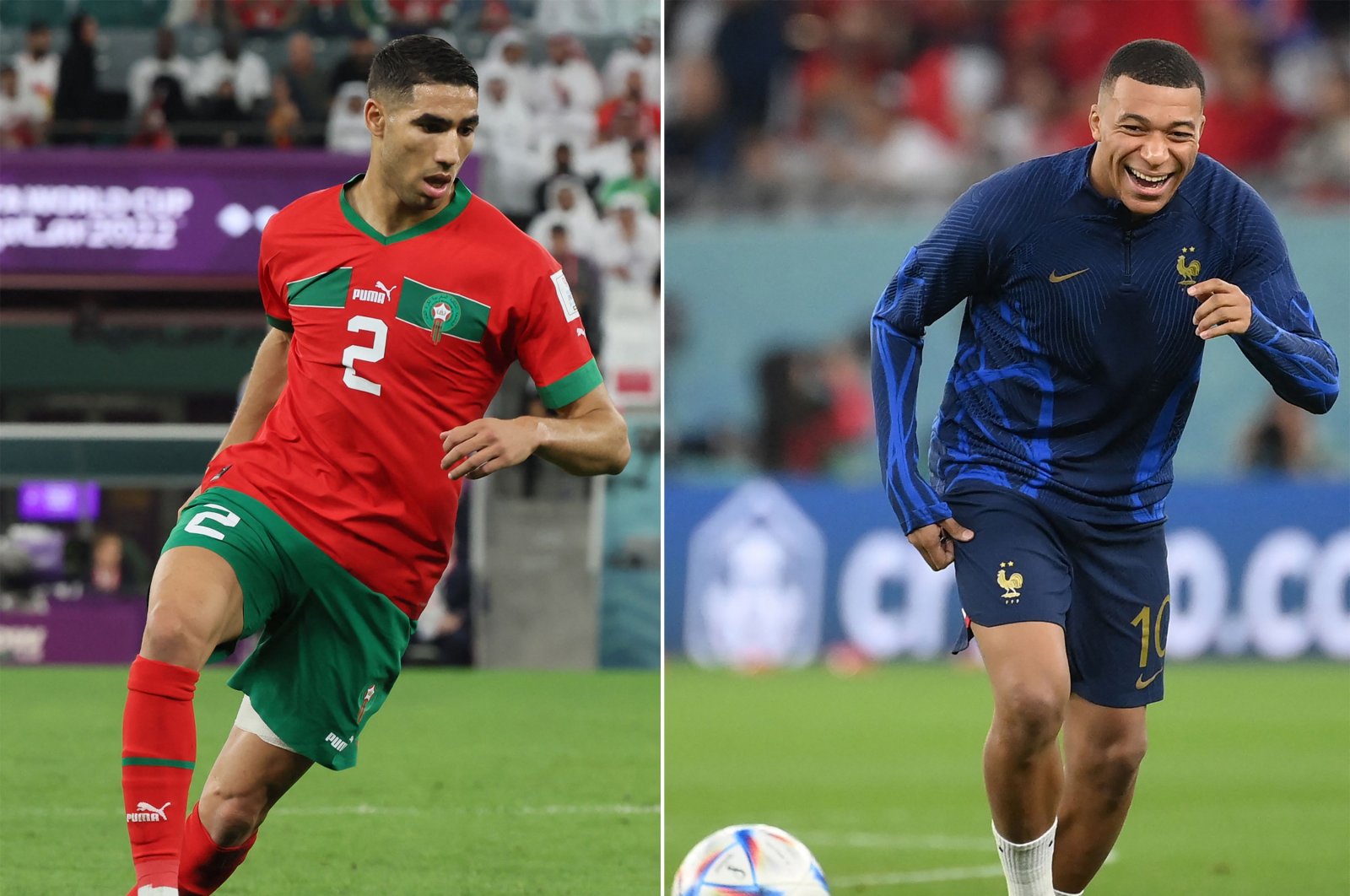
The Confederation of African Football (CAF) is currently facing an unprecedented crisis that threatens to undermine the legal framework of the continent's most prestigious tournament. Senegal has officially initiated a legal challenge against the decision to award the Africa Cup of Nations (AFCON) title to Morocco, a move that has sent shockwaves through the administrative offices in Cairo. At the heart of this dispute lies a complex web of eligibility rules, VAR interventions, and the opaque nature of regional football governance.
The Senegalese Football Federation (FSF) isn't just complaining about a bad refereeing call. They are alleging a fundamental breach of tournament regulations that, if proven, could force a total rethink of how titles are ratified. This isn't a case of "sore losers." It is a calculated, high-stakes legal maneuver aimed at the very heart of CAF’s executive decision-making process.
The Breach of Protocol Allegations
The core of Senegal's argument rests on the specific interpretation of player eligibility and the timeline of disciplinary filings. In modern international football, the margin for error is non-existent. Senegal claims that certain administrative oversights regarding the registration of the Moroccan squad should have resulted in a forfeiture long before the final whistle blew.
For a veteran observer of African football, this feels like a repeat of the 2019 "Rades Scandal" involving Esperance and Wydad Casablanca, where a broken VAR system led to years of litigation in the Court of Arbitration for Sport (CAS). Senegal is now banking on the fact that CAF’s own rulebook is its greatest weakness. They are meticulously documenting instances where the governing body allegedly ignored its own statutes to ensure the tournament reached its commercial peak, regardless of the underlying legal reality.
The sheer volume of documentation submitted by the FSF suggests this is not a PR stunt. It is an evidentiary onslaught. They are questioning the "force majeure" clauses that CAF frequently uses to bypass standard operational procedures. If the appeal succeeds, it won't just be about who gets the trophy; it will be about the total collapse of the current administration's credibility.
Morocco and the Power of Infrastructure
To understand why this dispute has reached such a fever pitch, one must look at the shifting tectonic plates of Moroccan influence within the continent. Under the leadership of Fouzi Lekjaa, Morocco has transformed into the undisputed hub of African football development. Their facilities are world-class. Their diplomatic reach is long.
Senegal’s legal team is essentially arguing that this influence has created a "soft power" environment where officials are hesitant to rule against the Kingdom. This is a heavy accusation. It suggests that the sporting merit of the AFCON has been compromised by the geopolitical and financial weight of its host and participants.
Morocco, for its part, maintains that its victory was earned on the pitch. They view the appeal as an attempt to litigate a result that their players secured through tactical superiority and physical endurance. The friction between these two heavyweights represents a broader struggle for the soul of the African game. Is the winner the team that plays the best, or the team that navigates the bureaucracy most effectively?
The Court of Arbitration for Sport as the Final Frontier
History shows that CAF’s internal appeals committee rarely overturns the decisions of its executive committee. This makes the move toward Lausanne and the Court of Arbitration for Sport (CAS) inevitable. Senegal is likely skipping the pleasantries and preparing for a grueling multi-year legal battle.
CAS is notoriously rigid. They don't care about the "spirit of the game" or the "glory of African unity." They care about the text. If Senegal can prove that a single registration form was signed late or that a yellow card accumulation was ignored by the match commissaries, the entire tournament structure could technically be ruled invalid.
This creates a terrifying precedent. Imagine a world where every AFCON winner is decided by a panel of Swiss lawyers three years after the fans have gone home. It ruins the commercial value of the tournament and makes sponsors wary of investing in a product that lacks finality. Yet, for Senegal, the principle of fairness outweighs the risk of institutional damage.
The Role of VAR and Technical Discrepancies
While the eligibility issue is the primary legal lever, the secondary complaint involves the inconsistent application of the Video Assistant Referee (VAR) during the knockout stages. In the match in question, several critical decisions were made—or ignored—that Senegal argues deviated from FIFA-mandated protocols.
It is a well-known secret in the industry that VAR implementation in Africa has been inconsistent. Technical failures, communication gaps between the booth and the field, and a lack of transparency in the review process have plagued recent editions. Senegal’s dossier includes frame-by-frame breakdowns of offside calls and penalty shouts that they claim show "manifest error."
Under standard football law, refereeing errors are usually considered final. However, if those errors are linked to a failure of the technology itself, or a failure to follow the mandatory review steps, the match result can theoretically be set aside. It is a long shot, but in a legal battle this intense, every technicality is a weapon.
The Economic Fallout of a Disputed Title
Sponsors like TotalEnergies and various broadcasting partners pay hundreds of millions of dollars for certainty. They want a champion they can put on a billboard. They want a trophy lift that stays a trophy lift.
The moment a title enters a legal "gray zone," its marketing value evaporates. If Senegal's appeal gains traction, the 2024/2025 commercial cycle could be disastrous for CAF. Who wants to sponsor a tournament where the winner might be stripped of their title in eighteen months?
Furthermore, the domestic leagues in both countries are feeling the pressure. The uncertainty trickles down to player valuations and transfer windows. If a Moroccan player's career is defined by an "asterisked" title, his market value in Europe could be affected. This is why the FSF and the FRMF (Moroccan Federation) are fighting with such ferocity. It is about the financial future of their respective footballing ecosystems.
A Broken System of Governance
The real story here is not the scoreline. It is the failure of CAF to modernize its dispute resolution mechanisms. For decades, the organization has operated on a system of patronage and consensus. That doesn't work in a world where billions of dollars are at stake and legal scrutiny is constant.
Senegal's appeal is a symptom of a larger disease. The "Old Guard" of African football administration is being challenged by a new generation of data-driven, legally-armed federations who are no longer willing to accept "gentleman's agreements." They want cold, hard compliance.
If CAF does not evolve, it will continue to find itself in these situations. The organization needs an independent disciplinary body that is completely divorced from the executive committee. Without that separation of powers, every major tournament will end in a courtroom rather than a celebration.
The Human Element in the Legal Fog
Lost in the talk of statutes and bylaws are the players themselves. Sadio Mané and Achraf Hakimi didn't sign up to be exhibits in a legal filing. They signed up to win for their nations. The psychological toll of having a continental achievement called into question cannot be overstated.
For the Senegalese squad, the appeal represents a sense of justice for their perceived mistreatment. For the Moroccans, it feels like an attempt to rob them of their finest hour. This bitterness will inevitably spill over onto the pitch during the next World Cup qualifying cycle. The rivalry has moved beyond the grass and into the psyche of the fans.
The Path to Resolution
There is no easy way out of this. If CAF dismisses the appeal, they look like they are protecting their own. If they uphold it, they admit their flagship tournament was a failure. The middle ground—a fine or a technical reprimand that doesn't change the result—will satisfy no one.
Senegal knows this. Their strategy is to force a total transparency audit of the tournament’s administrative records. They are looking for the "smoking gun" in the match reports and the delegate logs.
The next step is for the CAF Appeals Board to set a date for a hearing, but the clocks are already ticking toward the next international break. Every day that passes without a firm resolution further erodes the prestige of the AFCON.
The football world is watching, and for once, the most important movements aren't happening with a ball at someone's feet. They are happening in the fine print of a contract that was never supposed to be read this closely. Senegal has laid its cards on the table. Now, the rest of the continent has to decide if it wants to play by the rules or continue the status quo.
The administrative integrity of African sport is at a breaking point, and the resolution of this case will dictate the trajectory of the game for the next twenty years. If the laws of the game are only suggestions, then the game itself has already been lost.
Submit the formal challenge to the CAS and wait for the disclosure of the full match delegate reports.