Viktor Orbán has staked the future of the Hungarian economy on a single, high-stakes gamble: transforming a landlocked nation of ten million people into the world’s second-largest producer of electric vehicle batteries. To achieve this, his government has invited Asian giants like Samsung SDI and CATL to build sprawling gigafactories on the edge of quiet residential towns. The strategy was supposed to be a masterstroke of "Eastern Opening" diplomacy, bypassing Brussels’ frozen funds and securing Hungary’s relevance in the green transition. Instead, it has triggered a domestic crisis that is poisoning the water, sickening workers, and threatening the very political stability Orbán sought to cement.
The scale of the industrialization is staggering. By 2026, Hungary is projected to have a battery production capacity exceeding 200 GWh, fueled by over €15 billion in foreign direct investment. But as the concrete pours and the chimneys rise, the reality on the ground has shifted from an economic miracle to an environmental and public health emergency. This is no longer just a debate about GDP growth; it is a battle for the basic safety of the Hungarian countryside.
The Secret Intelligence Report on Samsung SDI
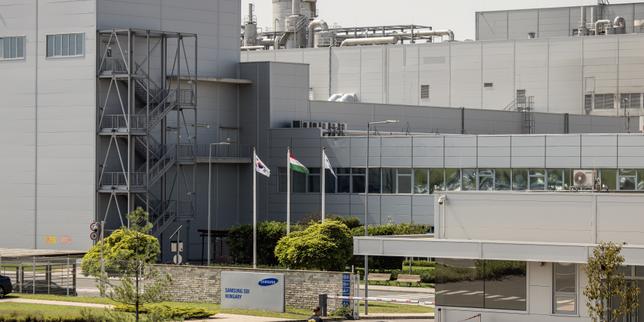
In February 2024, the facade of a clean, high-tech industry began to crumble. A leaked internal investigation by the Hungarian Constitution Protection Office—the country’s domestic intelligence agency—revealed a systemic cover-up at the Samsung SDI plant in Göd. The report, which landed directly on the Prime Minister’s desk, confirmed that the factory was exposing its workforce to "unacceptable" levels of carcinogenic chemicals.
The intelligence findings were damning. Internal measurements taken by the factory showed air contamination levels far worse than what was being reported to state regulators. In some departments, the concentration of nickel, cobalt, and manganese dust—all highly toxic when inhaled—exceeded legal limits by more than 500 times. This was not a minor technical glitch. It was a failure of the factory’s ventilation system, which was so poorly designed that it reportedly circulated toxic dust from the mixing rooms into other "clean" areas of the plant.
Even more troubling was the government’s response. Despite the intelligence agency flagging these risks as an "unacceptable political risk" due to potential public outcry, the state did not move to shutter the lines or impose crippling fines. Instead, the maximum penalty of 10 million HUF (roughly €25,000) was applied—a rounding error for a company with annual revenues exceeding 2,300 billion HUF. For the residents of Göd, the message was clear: the government’s priority was keeping the assembly lines moving, regardless of the biological cost to the people working them.
A Toxic Cocktail in the Danube
The contamination is not confined to the factory floor. Independent testing by the HUN-REN Ecological Research Center has recently detected alarming concentrations of PFAS, or "forever chemicals," in the water and sediments of the Danube River. These substances, used in battery electrolytes to increase stability, were found at levels nearly 100 times higher than upstream averages near industrial discharge points.
The danger lies in the chemistry. Unlike the larger molecules used in the textile industry, the battery sector utilizes short-chain PFAS. These compounds do not bind easily to river sediment. They stay mobile, flowing through the very gravel and sand filters that provide drinking water for Budapest and dozens of towns along the riverbank.
The presence of N-methyl-2-pyrrolidone (NMP), a solvent linked to fetal damage, has also been detected in private wells in Göd. While the government frequently dismisses these findings as "scaremongering," the data from the National Environmental Information System shows that the Samsung plant alone emitted 88 tons of toxic solvents into the air between 2019 and 2022. Rain washes these airborne toxins into the groundwater, creating a slow-motion environmental disaster that the current regulatory framework is ill-equipped—or perhaps unwilling—to stop.
The Erosion of Environmental Sovereignty
To understand how this happened, one must look at the systematic dismantling of Hungary’s environmental protections. Since 2010, the Orbán government has eliminated the independent Ministry of Environment, merging its functions into the Ministry of Agriculture. Local environmental agencies have been stripped of their autonomy, and "priority investment" status has been used to bypass mandatory public hearings and environmental impact assessments.
When the massive CATL plant in Debrecen faced fierce local opposition, the government simply issued a decree allowing for the "simplification" of public participation. Referendums were blocked. Information requests were denied. This is the hallmark of the new Hungarian industrial policy: a top-down mandate that treats local resistance as a nuisance to be managed rather than a legitimate democratic concern.
The sheer resource demand of these factories is another overlooked factor. In a country increasingly prone to severe droughts, the CATL facility in Debrecen is projected to consume up to 60,000 cubic meters of water per day. That is more than the daily consumption of the entire city of Debrecen. The government has pledged billions of forints to upgrade water infrastructure for the factories, even as the public water network in many parts of the country is literally falling apart from decades of underinvestment.
The China Dilemma and the 2026 Election
The political calculation behind the battery boom is becoming increasingly precarious. Orbán’s Fidesz party has traditionally relied on the support of rural and provincial voters—the very people now finding themselves in the shadow of these industrial titans. In towns like Debrecen, once a bedrock of Fidesz support, the "battery wasteland" narrative is gaining traction.
Furthermore, the economic logic is showing cracks. The global slowdown in EV demand has led to production cuts. In late 2024, Samsung SDI was forced to lay off hundreds of workers at its Göd plant, and CATL reportedly suspended the second phase of its Debrecen expansion. Hungary has essentially tied its national prosperity to a volatile, foreign-controlled sector.
The dependency on China is particularly acute. While the factories are on Hungarian soil, the high-value machinery, the specialized technology, and even much of the labor are imported. Hungary provides the land, the subsidized energy, the water, and the tax breaks, while the majority of the profits and technological intellectual property flow back to Shenzhen and Seoul.
As the 2026 general election approaches, the "battery scandal" is no longer a fringe environmental issue. It is a debate about what kind of country Hungary wants to be. Is it a sovereign nation protecting its people and its natural heritage, or is it a low-cost assembly hub for the world’s superpowers? The black graphite dust settling on the roofs of Göd suggests the answer may already be written in the wind.
Would you like me to analyze the specific EU regulatory changes coming in 2027 that might force these factories to upgrade their filtration systems?