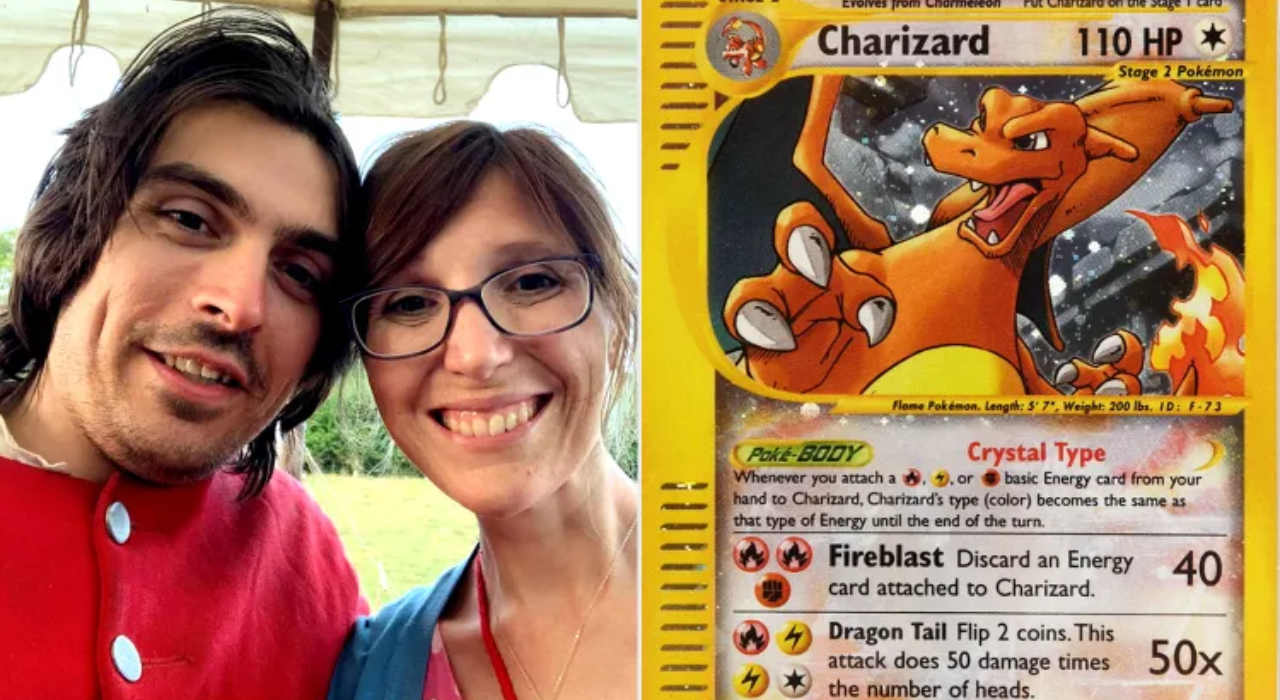
Stop looking for a lottery ticket in your parents' crawlspace.
Every time a story breaks about a "regular guy" funding a wedding, a mortgage, or a private island by selling a dusty binder of Charizards, the collective IQ of the collecting world drops ten points. These narratives are the financial equivalent of junk food: sweet, easy to swallow, and completely devoid of substance. They sell a fantasy that your childhood clutter is a secret gold mine, ignoring the cold, hard mechanics of the secondary market.
The "attic find" is the rarest anomaly in the hobby. For every person who pays for a venue with a PSA 10 Base Set Holo, ten thousand others are holding onto warped, scratched, and "unlimited" print run cardboard that wouldn't cover the cost of a wedding cake, let alone the open bar.
We need to kill the myth of the accidental windfall.
The Survivorship Bias of the Cardboard Gold Rush
The competitor articles love the "find." They ignore the "grind."
When you hear about a $200,000 sale, you are seeing the result of a perfect storm that 99.9% of collections will never weather. To hit those numbers, a card needs to satisfy a brutal trifecta: extreme scarcity, iconic status, and flawless preservation.
Most people don't have that. They have "lightly played" cards stored in rubber bands or PVC sleeves that have been leaching oils into the card stock for two decades.
The Grading Trap
If you think your cards are valuable, you are probably wrong until a third-party grader (TPG) like PSA, BGS, or CGC says otherwise. This is where the "free money" narrative falls apart.
Grading is a high-stakes gamble. You pay for the privilege of having a professional tell you your treasure is actually a paperweight.
- The Cost: Shipping, insurance, and grading fees can easily exceed the value of the card itself if it doesn't hit a 9 or a 10.
- The Turnaround: You aren't "finding" money today. You are locking your assets in a plastic slab for months, praying the market doesn't shift while your card sits in a backlog.
- The Spread: The price difference between a PSA 9 and a PSA 10 is often exponential. A card worth $500 as a 9 might be worth $10,000 as a 10. If the grader had a bad cup of coffee that morning and misses a microscopic surface scratch, your "wedding fund" just evaporated.
Pokémon is an Asset Class, Not a Hobby
If we are going to talk about cards paying for weddings, we have to stop treating them like toys and start treating them like volatile, low-liquidity commodities.
Most "insiders" won't admit that the Pokémon market behaves more like small-cap stocks than a stable collectibles market. It is driven by hype cycles, influencer manipulation, and speculative bubbles. When a celebrity like Logan Paul wears a Pikachu around his neck, the floor rises for everyone—temporarily. When the hype dies, the "investors" who bought in at the peak are left holding bags of shiny paper.
Liquidity is the Silent Killer
You can sell $50,000 of Apple stock in seconds. Try selling a $50,000 Pokémon card.
You have to find a buyer. You have to navigate auction house commissions (often 15-20%). You have to deal with the risk of mail fraud, chargebacks, or the buyer disputing the condition. The "windfall" mentioned in these puff pieces is always the gross total, never the net. After taxes and fees, that "free wedding" starts looking like a very expensive part-time job.
The Myth of the "Rare" Collection
"Rare" is the most abused word in the hobby.
A 1st Edition Shadowless Charizard is rare. A 1998 Japanese Promo Trophy card is rare. Your 1999 Base Set 2 unlimited Magneton is not rare. Millions of them were printed. Thousands of them are sitting in binders just like yours.
The market has a "junk wax" problem. Because everyone thinks these cards are valuable, everyone is preserving them. Scarcity is manufactured by the grading process, not the existence of the card itself. We are currently seeing a massive influx of "modern" cards—those printed in the last five years—being sent to grading companies in record numbers. This is a speculative bubble waiting for a pin. If everyone has a Gem Mint 10, then a Gem Mint 10 is the new average. And average doesn't pay for weddings.
Stop Checking the Attic and Start Checking Your Math
The opportunity cost of holding onto "potential" value is staggering.
Imagine a scenario where you have a collection worth $5,000 in 2005. If you sold it then and put that money into a boring S&P 500 index fund, you’d be looking at a vastly different financial picture today without the stress of humidity control, UV protection, or market volatility.
People love the "found money" story because it requires zero effort. It’s a fairy tale for the lazy. Real wealth in collectibles is built by people who understand pop culture trends, print runs, and market timing—not by guys who forgot a box in the rafters.
The Professional’s Reality Check
I have watched people dump their life savings into "sealed product" thinking it's a guaranteed 10% annual return. I’ve seen collections appraised at six figures sell for half that because the owner needed cash fast and couldn't wait for the right collector.
The downsides are real:
- Counterfeits: High-end fakes are getting better every day. Your "attic find" might be a clever bootleg from a 2001 flea market.
- Market Fatigue: The "nostalgia" buyers (Millennials) are currently at their peak spending power. What happens when the next generation doesn't care about 151 original monsters? The demand floor drops.
- Physical Risk: Fire, flood, and theft. Most homeowners' insurance policies won't cover a high-value card collection without a specific (and expensive) rider.
The Hard Truth for the "Hobbyist"
If you love the cards, keep them. If you love the game, play it. But if you are staring at a binder as a "break glass in case of emergency" fund, you are delusional.
These viral stories are outliers. They are the 1-in-a-million shots that keep the lottery industry alive. By framing a Pokémon collection as a viable way to pay for major life events, media outlets are encouraging a dangerous, speculative mindset in people who can't afford to lose.
Your wedding shouldn't depend on the opinion of a guy in a grading lab looking at a piece of cardboard through a 10x loupe.
Get a savings account. Build a portfolio. Leave the "attic gold" to the people who are okay with gambling. Because that’s what this is: a casino where the house always wins, and the house is the person who sold you the pack twenty years ago.
Stop hunting for the Charizard. Start building a real life.