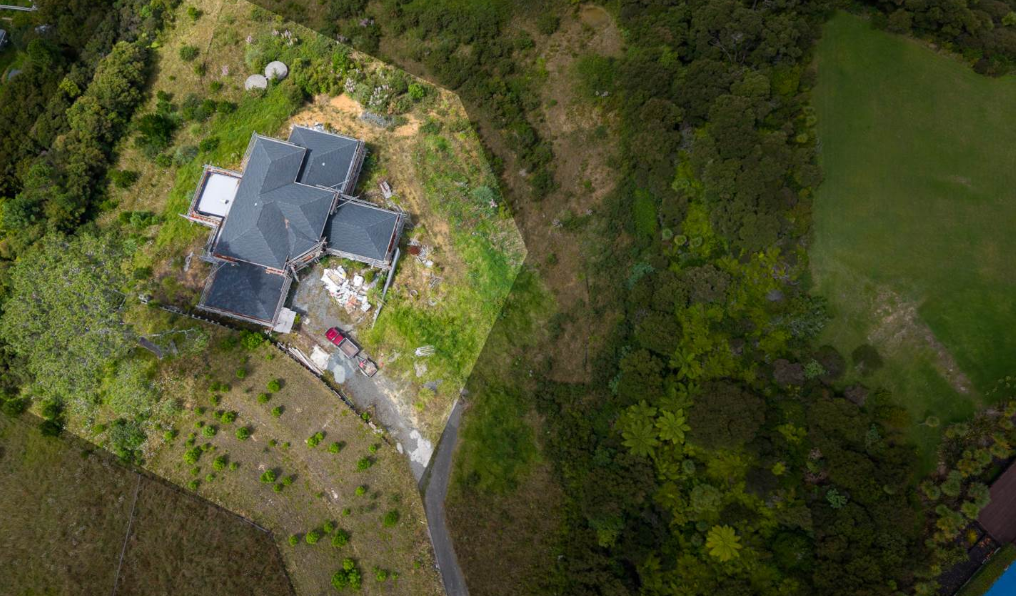
The acquisition of an incomplete luxury estate represents a unique class of distressed asset transaction where value is derived not from the structure itself, but from the Delta between the Replacement Cost and the Liquidation Value. When a "mystery buyer" acquires a partially constructed mansion, they are not purchasing a home; they are acquiring a complex bundle of options, permits, and sunk capital. This transaction is governed by the Theory of Irreversible Investment, where the original developer’s inability to find liquidity forces a massive transfer of equity to the secondary buyer who possesses the capital to absorb the carry costs.
The Three Pillars of Distressed Residential Arbitrage
The logic behind purchasing a half-built mansion rests on three structural pillars that differentiate it from a standard turnkey acquisition.
1. Capital Expenditure Neutralization
In a standard real estate transaction, the buyer pays a premium for the seller's subjective aesthetic choices. In a distressed, incomplete build, the buyer enters at a point where the Core Infrastructure—the foundation, framing, and rough-ins—is complete, but the high-margin finishings are not. This allows the buyer to acquire the "bones" of the asset at or below the cost of materials while retaining the optionality to finish the interior to their specific utility function.
2. Time-to-Market Compression
Building a mega-mansion from a greenfield site involves a multi-year lead time for environmental impact reports, zoning variances, and architectural approvals. By purchasing a mid-construction asset, the buyer bypasses the Permitting Bottleneck. They effectively "buy time," which, in a high-inflation environment for labor and materials, is a quantifiable financial gain.
3. The Liquidation Discount
Partial structures are notoriously difficult to value because they are illiquid. Most traditional mortgage lenders will not finance a home without a Certificate of Occupancy. This restricts the buyer pool exclusively to cash-heavy entities or private equity firms. The absence of a competitive bidding market among retail buyers creates a "Liquidation Gap," often resulting in a purchase price that is 30% to 50% below the sum of the land value and construction costs incurred to date.
The Cost Function of Completion
A common error in analyzing these "mystery" purchases is underestimating the Information Asymmetry regarding structural integrity. The new owner must account for the Obsolescence Factor. If a project sat dormant for 12 to 24 months, the cost function is not merely the remaining budget, but the cost of remediation.
The Remediation Variables:
- Exposure Degradation: Unprotected timber framing or steel reinforcement exposed to the elements requires structural certification before work resumes.
- Code Drifting: Building codes are not static. A design approved three years ago may no longer meet updated energy efficiency or seismic standards, necessitating expensive retrofitting of the existing shell.
- Subcontractor Lien Risk: In many jurisdictions, unpaid subcontractors from the original developer can attach liens to the property. The mystery buyer must perform a rigorous audit of the "chain of title" to ensure they aren't inheriting a web of litigation.
The Strategy of the Anonymous Entity
The use of an LLC or a blind trust—the "mystery buyer" trope—is a calculated move to prevent Price Gouging from contractors. When a high-net-worth individual is publicly linked to a massive project, "luxury pricing" is often applied across the supply chain. By maintaining anonymity, the buyer’s representatives can negotiate completion contracts based on market rates rather than the owner's perceived deep pockets.
Furthermore, this anonymity serves as a shield against Precedent Appraisal. In the world of high-end real estate, the sale price of a neighboring property dictates the value of the next. If a buyer can hide the true purchase price of a distressed asset, they prevent the local market from cooling, thereby protecting their eventual exit or the valuation of their broader portfolio.
The Structural Breakdown of Risk
The acquisition of a half-built mansion follows a specific risk-reward ratio that changes as the project approaches the "Dry-In" stage (when the building is sealed from the weather).
- Pre-Dry-In Risk: High. The asset is vulnerable to mold, rot, and structural shifting. The discount must be steep—often near land value only.
- Post-Dry-In/Pre-Finish Risk: Medium. The structure is stable, but the internal systems (HVAC, Electrical, Plumbing) are untested. The buyer is betting on the quality of work they didn't oversee.
- Finish-Out Phase: Low. This is where the arbitrage is realized. The buyer installs high-end finishes, turning a skeletal eyesore into a premium asset.
The Economic Signal of the Mystery Purchase
These transactions often signal the bottom of a local luxury market. When institutional or "smart" money begins snapping up incomplete shells, it indicates that the Replacement Cost of building new has exceeded the cost of acquiring distressed inventory. It is a bet on the long-term scarcity of land and the continued inflation of construction inputs.
The buyer isn't just looking for a home; they are executing a Synthetic Development Play. They are acting as the developer of last resort, capturing the profit margin that the original builder lost to insolvency. The "mystery" is rarely about privacy for privacy's sake; it is a tactical deployment of capital into an inefficient market.
The final strategic move for an entity in this position is to treat the completion as a Turnaround Operation. This involves re-permitting the site to current market demands—perhaps adding ADUs or advanced home-office infrastructure that wasn't in the original 2019 plans—thereby maximizing the yield on the "stolen" equity acquired at the time of the distress sale.


