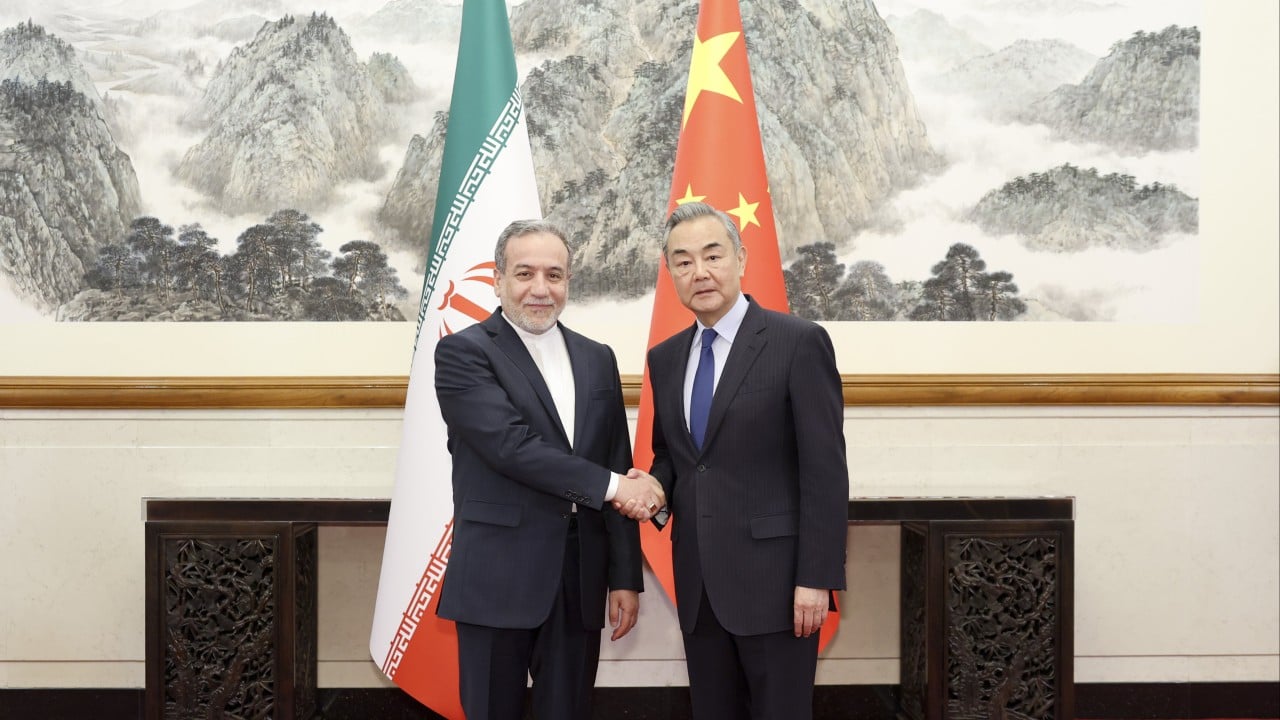
Geopolitical analysts love a good "Trump-scare" narrative. They’ve spent the last week painting Iranian Foreign Minister Abbas Araghchi’s sudden flight to Beijing as a frantic, last-minute attempt to build a shield against the incoming "Maximum Pressure 2.0" administration. It’s a convenient, low-effort story. It’s also completely wrong.
If you think Tehran is running to Beijing because they’re terrified of a Mar-a-Lago tweet, you’ve fundamentally misunderstood the last decade of Eurasian integration. This isn’t a defensive crouch. This is the solidification of a long-term architectural shift in the global energy market that operates entirely outside the reach of the U.S. Treasury.
The mainstream press wants you to believe Iran is desperate. In reality, Iran is doing something far more dangerous to Western hegemony: they are normalizing the "Parallel Economy."
The Myth of the Trump Factor
The lazy consensus suggests Araghchi is in China to beg for protection before January. This ignores the cold reality of the 25-Year Strategic Partnership signed in 2021. Iran didn't wait for an election cycle to pick a side; they picked a side when the JCPOA (Joint Comprehensive Plan of Action) turned into a pile of worthless paper in 2018.
Araghchi isn’t there to discuss Trump. He’s there to discuss the plumbing.
I’ve watched diplomats waste years trying to preserve "Western-facing" trade routes while their back-channel counterparts were building the actual infrastructure that matters. The "battle scars" of the first Maximum Pressure campaign taught Tehran that Europe will never defy Washington, but China will—if the price of oil is right and the payment rails are private.
It’s About the Pipes, Not the Politics
The focus on high-level diplomacy masks the technical reality. China is currently importing record amounts of Iranian crude, often labeled as originating from Malaysia or Oman. This isn't a "loophole" the U.S. can just "close" with a new executive order. It is a massive, multi-billion dollar logistical machine involving:
- Dark Fleet Logistics: A decentralized network of aging tankers that operate without Western insurance or tracking.
- RMB Denominated Trade: Moving away from the SWIFT system isn't a dream; for Iran and China, it’s a Tuesday.
- Refinery Integration: Small "teapot" refineries in China have spent years optimizing their setups specifically for Iranian heavy grades.
When Araghchi sits down in Beijing, he isn’t asking for a diplomatic statement. He is negotiating the expansion of the Petroyuan. Every barrel of oil sold for Yuan is a direct hit to the dollar's status as the global reserve currency. This is the "nuance" the mainstream media skips because it’s harder to explain than "Iran is scared of Trump."
The "People Also Ask" Delusion
You’ll see people asking: "Can China protect Iran from U.S. sanctions?"
This is the wrong question. It assumes the U.S. sanctions are still an impenetrable wall. They aren't. They are a sieve. China doesn't need to "protect" Iran in a military sense; it provides the economic oxygen that makes the sanctions irrelevant. The real question is: "At what point does the U.S. sanctioning China for buying Iranian oil become a suicide pact for the American economy?"
The answer is: we’ve already reached it.
If Washington tries to sanction the Chinese banks clearing these oil trades, they risk a systemic collapse of the global financial system. Beijing knows this. Tehran knows this. Araghchi is in Beijing to ensure that this leverage is calibrated correctly.
The Cost of the Alliance
Let’s be brutally honest: this isn't a charity mission for Beijing. China is a predatory lender of last resort.
Tehran is trading its long-term sovereignty for short-term survival. By tethering their economy to the Yuan and Chinese infrastructure projects, Iran is effectively becoming a resource-rich satellite state.
- The Downside: Iran loses the ability to play East against West.
- The Reality: They lost that ability years ago when the West proved it couldn't guarantee its own signatures on a treaty.
I’ve seen dozens of nations try to walk the middle ground. It fails every time. Iran has chosen the "Eastern Pivot" not out of fear, but out of a cynical, cold-blooded realization that the unipolar world is dead.
Dismantling the "Sanctions Work" Narrative
We need to talk about the data. The IMF recently projected Iran’s GDP growth to remain positive despite "crippling" sanctions. Why? Because the "Parallel Economy" is now a mature industry.
Standard economic models fail here because they rely on official trade data. Official trade data is theater. The real movement of capital happens in the shadows, through regional exchange houses (Sarafi) and barter arrangements that don't show up on a Bloomberg terminal.
Araghchi’s visit is about formalizing these "shadow" structures. He’s looking to move the relationship from a "survivalist" footing to a "developmental" one. This includes the integration of Iranian power grids with Chinese-built infrastructure in Iraq and the expansion of the Belt and Road Initiative (BRI) through the heart of the Iranian plateau.
Stop Watching the White House
If you want to know what’s going to happen in the Middle East, stop looking at who is sitting in the Oval Office. Look at the shipping lanes in the Strait of Malacca and the clearing houses in Shanghai.
The U.S. is playing a game of 20th-century whack-a-mole with sanctions, while the rest of the world is building a 21st-century financial bypass.
Araghchi isn’t in Beijing to hide from a storm. He’s there to help finish the house.
The Western press can keep writing about "fears" and "tensions." Meanwhile, the tankers keep moving, the Yuan keeps flowing, and the map of the world keeps tilting East.
Washington isn't the protagonist of this story anymore. It's the obstacle. And as any engineer will tell you, obstacles are meant to be bypassed.