Elena stood before the mirror, paralyzed by the beige-ness of it all. It was April, that indecisive month where the sky oscillates between a bruised violet and a bright, mocking gold. She looked fine. Professional. Safe. But she felt invisible, like a sketch waiting for the artist to commit to a color. She was a ghost in a trench coat, haunting her own hallway.
We have all been Elena. We treat our wardrobes like a logistical puzzle to be solved—socks plus trousers plus shirt equals person—forgetting that dressing is actually an act of rebellion against the mundane. The transition from winter to spring isn't just a change in temperature; it is a psychological shift. We are shedding the heavy armor of wool and down, but without the right intentionality, we often end up looking unfinished.
The secret to moving through the world with a sense of gravity isn't found in a total wardrobe overhaul. It’s in the tactile, small-scale decisions. It is the alchemy of the accessory.
The Weight of a Single Link
Consider the wrist. It is one of the most expressive parts of the human body, yet we leave it bare or, worse, tethered to a piece of plastic that tracks our heart rate but ignores our soul. Elena reached for a heavy, gold-toned chain bracelet. Not a dainty thing that disappears against the skin, but something with architectural intent.
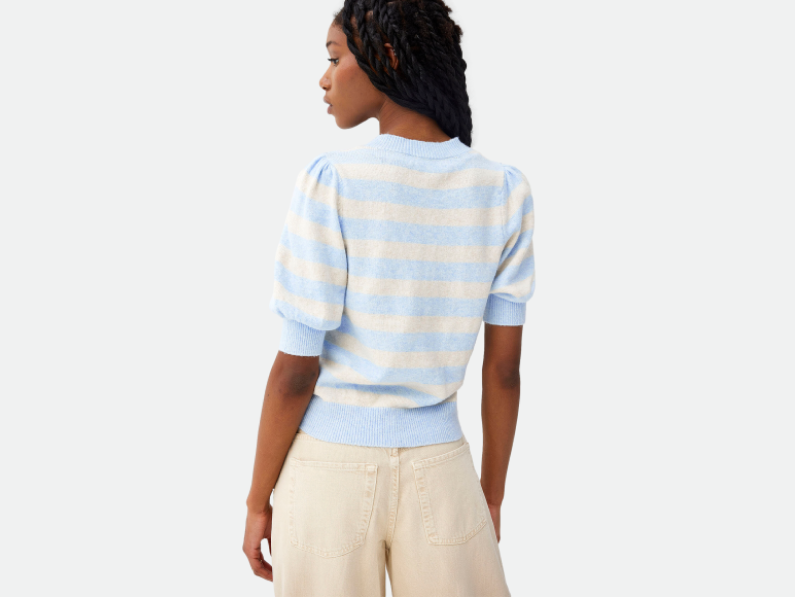
When she snapped it on, the clicking sound was a punctuation mark. Suddenly, the soft sleeve of her knit sweater had a reason to be pushed back. The gold caught the weak morning sun, casting a warmth onto her skin that coffee couldn't provide. This is the first rule of the spring transition: Structural Jewelry.
In the dead of winter, jewelry is a casualty of layers. In the summer, it’s a sweaty afterthought. But in the spring, a bold link or a sculptural earring serves as an anchor. It tells the observer—and more importantly, the wearer—that this outfit was a choice, not an accident. It provides a hard edge to the soft fabrics of the season.
The Geometry of the Walk
Elena stepped outside. The wind was still sharp enough to make her wince, but she didn't reach for her heavy pashmina. Instead, she tied a silk square around her neck.
Silk is a curious material. It is deceptive. It weighs almost nothing, yet it traps heat with a tenacity that rivals heavier fabrics. But the physics of silk aren't why it matters. It matters because of the movement. A silk scarf in a geometric print adds a layer of kinetic energy to a static outfit. As Elena walked toward the subway, the ends of the silk flickered behind her like a small flame.
Think of a silk scarf as a mobile piece of art. It breaks up the vertical line of a coat. It draws the eye toward the face. If you are wearing a neutral palette—those creams, tans, and olives that define the "clean girl" aesthetic—the scarf is your opportunity to introduce a controlled chaos. It’s the difference between a blank page and a poem.
Protecting the Gaze
By noon, the clouds had surrendered. The light was bouncing off the glass buildings, a chaotic glare that forced everyone to squint. Elena pulled out her sunglasses.
They weren't the tiny, ironic frames that were popular three years ago. Those are for people who want to be looked at. Elena’s were wide, dark, and slightly feline—the kind of frames that allow the wearer to look out at the world without being perceived.
Sunglasses are the most functional accessory we own, but their true value is emotional. They are a mask. In the vulnerable light of spring, when the world feels new and slightly raw, the right pair of sunglasses offers a sense of architectural privacy. They structure the face. They turn a tired morning into a cinematic moment. When you find a pair that fits the bridge of your nose perfectly and offers that slight weight of quality acetate, you aren't just protecting your retinas from UV rays. You are curated.
The Architecture of the Hand
Elena met a friend for lunch. As she set her bag on the chair next to her, she noticed how much it had changed her silhouette.
In winter, we carry large, utilitarian totes because we are lugging around "just in case" items—umbrellas, spare gloves, a crumpled hat. Spring demands a return to form. Elena had swapped her oversized work bag for a structured bucket bag in a deep cognac leather.
There is a psychological lightness that comes with a smaller, more rigid bag. It forces a decluttering of the life. You carry the phone, the wallet, the lipstick, and the keys. That’s it. The bag becomes a piece of handheld architecture. It provides a contrast to the fluid, oversized trench coats and wide-leg trousers that dominate the season. Without a structured bag, a spring outfit can easily look like a pile of laundry. With it, the fabric has a boundary.
The Grounding Cord
As they walked through the park after lunch, the conversation turned to the "effortless" look that seems to haunt every fashion magazine.
"It’s a lie," Elena laughed. "Effortless is the result of a lot of hidden effort."
She pointed to her feet. She wasn't wearing the chunky sneakers of the previous season. Instead, she had opted for a pointed-toe slingback in a soft suede.
The slingback is a masterclass in the "in-between." It offers the coverage of a shoe with the breathability of a sandal. But more than that, the pointed toe acts as an exclamation point. It elongates the leg and adds a sharpness to the hem of a denim jean. It says that you are prepared for a meeting, but you are also aware that the sun is out. It is a footwear choice that acknowledges the reality of the pavement while dreaming of a garden.
The Waistline Narrative
Later that afternoon, the temperature dipped again. Elena buttoned her blazer. It was an oversized fit, borrowed-from-the-boys, which felt a bit like wearing a tent.
She reached into her bag and pulled out a slim leather belt. She didn't loop it through her jeans; she cinched it over the blazer itself.
The belt is perhaps the most misunderstood tool in the kit. We think of it as a device to keep pants from falling down. In reality, a belt is a tool for silhouette manipulation. By cinching the waist over an outer layer, Elena reclaimed her shape from the volume of the fabric. It created an hourglass silhouette out of a rectangular garment. It was a visual reminder that there was a person inside the clothes, not just a hanger.
The Quiet Power of the Hair
As the sun began to set, Elena’s hair, usually a victim of spring humidity, started to frizz. In the past, she would have just shoved it into a lackluster ponytail with a rubber band.
Instead, she pulled out a matte oversized claw clip in a deep tortoiseshell.
It took five seconds. She twisted, clipped, and let a few stray strands fall around her face. The difference was immediate. The claw clip is a nod to the 90s, yes, but it’s also a nod to the idea that even our "lazy" moments can be aesthetic. It lifted her hair off her neck, highlighting the line of her jaw and the gold links of her bracelet.
It was the final piece of the puzzle.
Elena ended her day not as the ghost she had been that morning, but as a woman who occupied space. She hadn't spent thousands on a new wardrobe. She hadn't followed a trend that would be dead by June. She had simply looked at the gaps in her story and filled them with intention.
The gold on her wrist, the silk at her throat, the leather at her waist—these weren't just items. They were the bridge between the person she felt like inside and the person the world saw. They were the tools she used to negotiate with the changing season, turning a standard Tuesday into something that felt, for the first time in months, like an arrival.
She stood at her door, the keys in her hand, the gold chain catching the last of the light. The beige was gone. In its place was a woman who knew exactly how to move through the wind.