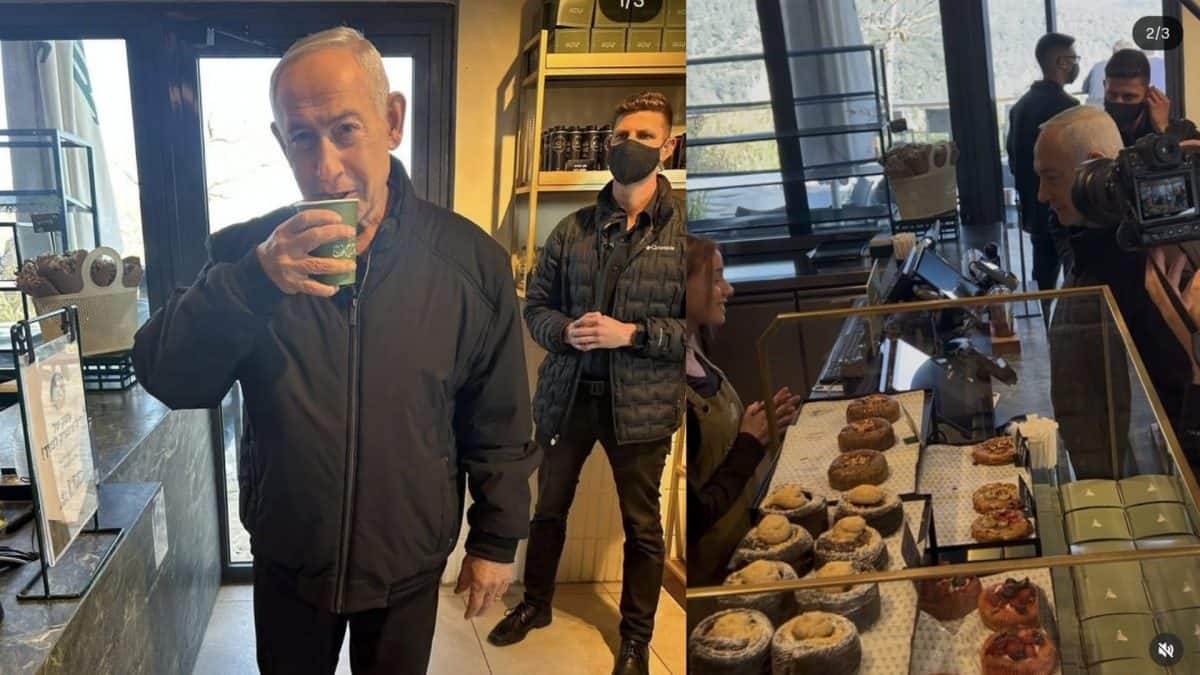
Elon Musk’s Grok AI just stepped into a political landmine. It happens. When a video surfaced of Israeli Prime Minister Benjamin Netanyahu at a Jerusalem cafe, the chatbot didn't just hesitate. It flagged the footage as a deepfake. The reason? Netanyahu appeared to have six fingers on one hand. It’s the classic AI "hallucination" trope, but this time the tables turned. The cafe didn't just issue a press release. They dumped high-resolution photos of the Prime Minister actually holding his coffee, five fingers clearly accounted for.
This isn't just a funny story about a glitchy bot. It’s a massive red flag for how we're currently trying to outsource truth to algorithms. If you're relying on a chatbot to tell you what’s real in a war zone or during an election, you're playing a dangerous game. Most people think AI detection is a science. In reality, it’s often just a guess based on pattern recognition that fails when the lighting is weird or the camera angle is awkward.
The Jerusalem Cafe Incident and the Six Finger Myth
The footage in question showed Netanyahu at a local spot in Jerusalem, a move clearly intended to project a sense of normalcy. Grok analyzed the frames and spotted what it thought was an anatomical impossibility. We’ve all seen the memes. AI-generated images historically struggle with hands, often adding extra digits or blurring them into fleshy stumps.
But here’s what Grok missed. Real cameras have artifacts too. Motion blur, low frame rates, and shutter lag can make a moving hand look like a distorted mess. When the cafe owners released the still photos, the "sixth finger" vanished. It was just a trick of the light and a poorly timed pause on a video player.
This highlights a massive gap in how "AI Detectors" work. They look for specific "tells" that they've been trained on. If an AI is told that "weird hands equal fake," it will find weird hands everywhere. It doesn't understand context. It doesn't know that a Prime Minister is unlikely to release a poorly rendered deepfake of himself drinking an espresso when he could just... go drink an espresso.
Why Your Favorite AI Detector Is Probably Guessing
You can't just plug a video into a tool and get a 100% "Real" or "Fake" answer. It doesn't work that way. These tools provide a probability score. When Grok or any other LLM-based tool analyzes media, it’s looking for digital noise or inconsistencies in pixel distribution.
There are three main reasons these systems fail so often.
Compressed Data
Social media platforms like X or Telegram crush video files to save space. This compression adds "noise" that looks remarkably like the artifacts found in AI generation. To a bot, a heavily compressed real video looks "suspicious."
The Training Data Bias
Most AI detectors are trained on specific models like Midjourney or DALL-E. If a video is real but shot on a phone with aggressive "beauty mode" software or computational photography features—which almost all modern iPhones and Pixels use—the detector might flag those software-enhanced pixels as "artificial."
Context Blindness
Algorithms don't read the news. They don't understand the logistics of a public appearance. They only see the grid of pixels. This is why human verification—the old-school way—still wins.
The Danger of Delegating Truth to Chatbots
We're moving into a period where "Liar’s Dividend" is a real threat. This is a concept where a person caught doing something real on camera can simply claim it’s a deepfake because "the AI said so."
When Grok labeled the Netanyahu video as fake, it gave fuel to skeptics and conspiracy theorists. Even after the cafe released the photos, the "fake" label had already traveled halfway around the world. Correcting a digital lie is like trying to take pee out of a pool. It’s nearly impossible.
The Netanyahu incident shows that the tech isn't ready for prime time. If a leader’s mundane coffee run triggers a false positive, imagine the chaos when a video of a sensitive military operation or a controversial speech drops. If we keep treating AI as the ultimate arbiter of truth, we’re going to end up in a spot where nothing is believable, even when it’s staring us in the face.
How to Actually Spot a Fake Without Relying on Grok
Stop looking for fingers. The tech is getting too good for that. Instead, use the techniques professional fact-checkers use. It’s called lateral reading. Don't just stare at the video. Look at the surroundings.
Check the shadows. Do they align with the light sources in the room? In the Jerusalem cafe photos, the shadows on the table matched the overhead lighting perfectly. Deepfakes often struggle with consistent light bouncing off reflective surfaces like coffee cups or glasses.
Look at the edges. Where a person's hair meets the background is usually where AI fails. If the hair looks like a solid "helmet" or flickers against the wall, you might have a fake. In the Netanyahu video, the interaction between his jacket and the chair was natural, showing no digital bleeding.
Verify the source. This is the most important step. Did the video come from a verified local business or a random account with eight followers? The cafe’s involvement was the smoking gun here. They had skin in the game. A random bot doesn't.
The Reality of Computational Truth
We have to stop asking "is this AI?" and start asking "is this true?" Those are two different questions. A video could be technically "real" but edited to be misleading. Conversely, a video could have AI-enhanced audio but show a real event.
The Jerusalem incident is a reminder that AI is a tool, not a judge. It’s prone to the same biases and errors as the people who programmed it. If you want to stay informed, you need to diversify your intake. Don't let a single chatbot dictate your reality.
Check multiple sources. Look for raw footage. Watch for physical inconsistencies that go beyond a blurry hand. Most importantly, wait twenty minutes before hitting the "repost" button. The truth usually catches up, but only if you give it a chance to breathe.
Start by verifying the next "viral" clip you see through a reverse image search on Google or Yandex. Look for the earliest possible upload. If the original source is a reputable local outlet or a witness with a history of credible posts, it’s likely legitimate. If the only source is a bot-heavy thread on social media, keep your guard up. Stop trusting the "detectors" and start trusting the evidence.