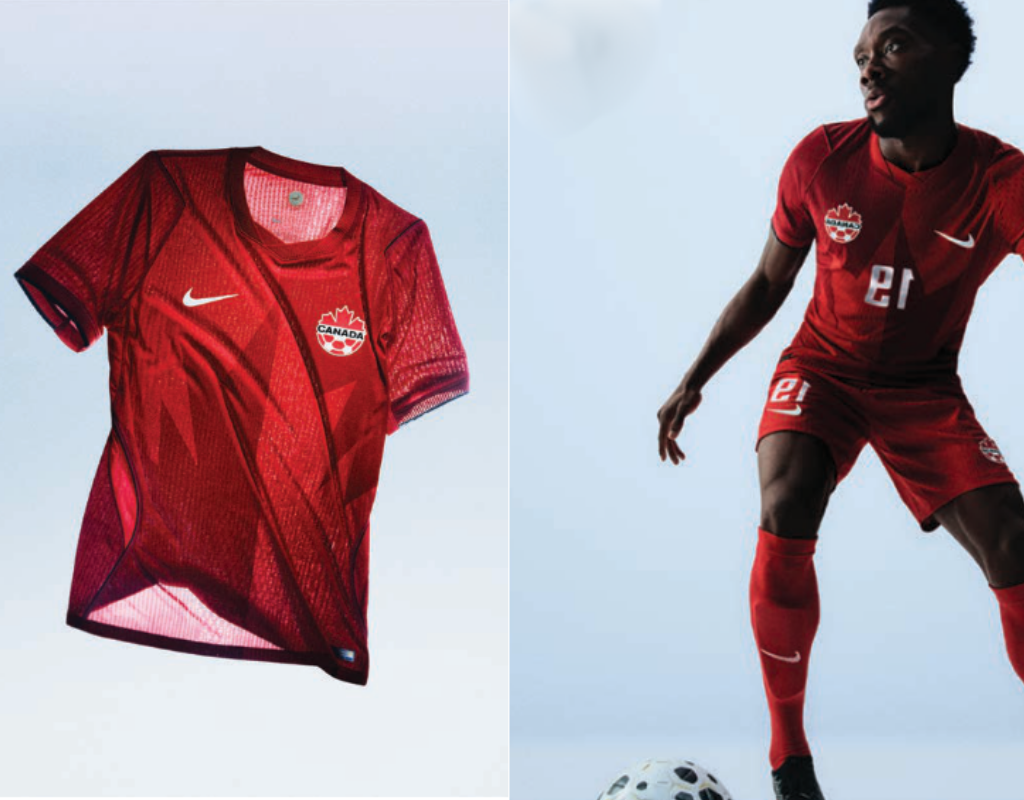
Nike and Canada Soccer just dropped the "Full Tilt" collection for the 2026 FIFA World Cup, and the corporate cheerleaders are already lining up to call it "bold" and "unapologetic." They are lying to you. What we actually witnessed this week wasn't a fashion reveal; it was a white flag. After years of financial incompetence and kit-supply humiliations—remember Qatar 2022, where Canada was the only team without a new jersey because they literally forgot to order them in time?—this 2026 drop is a desperate attempt to overcompensate with "storytelling" that nobody asked for.
I’ve seen federations blow millions on rebranding to hide the fact that the cupboards are bare. This is exactly that. By leaning into "Black Ice" and "Lucky Loonies," Canada Soccer is trying to distract you from the fact that they’ve essentially outsourced the national identity to a Portland-based design floor that thinks a cracked-ice graphic is a substitute for a soul. You might also find this related article useful: Why Tennis Stars Are Finally Ready to Walk Away from the French Open.
The "Black Ice" Myth: Aesthetic or Apology?
The away kit is being heralded as a "distressed" masterpiece. It’s a black base covered in a chaotic, white shattered-ice pattern. The official narrative says it represents "tension and beauty" and the "unshakeable mentality" of the team.
Here is the truth: It looks like a Petro-Canada tracksuit from 1994 that got caught in a drywall sander. As discussed in detailed coverage by FOX Sports, the implications are widespread.
When a design is this "busy," it’s usually because the designers are trying to hide a lack of core identity. Look at the heavy hitters—Italy, Brazil, Argentina. They don't need "shattered ice" to tell you who they are. They have a color, a crest, and a history. Canada Soccer has spent so long in a financial and legal war with its own players that it has forgotten what its colors actually are. We are a "Red and White" nation. Why, for our first-ever home World Cup, are we abandoning our secondary national color for "Stealth Black"?
- The Problem: Black isn't a Canadian soccer color. It’s a "we think this will sell to teenagers in streetwear shops" color.
- The Nuance: Using black as a "third" or "alternate" is fine. Making it the primary away look for a home World Cup is a commercial cynical-play that prioritizes jersey sales over national branding.
The Lucky Loonie: A Gimmick for a Broke Federation
Hidden inside the collar is a "Lucky Loonie" graphic. It’s a callback to the 2002 Salt Lake City Olympics, where a coin was buried under center ice. It’s cute. It’s also incredibly lazy.
Relying on hockey folklore to sell soccer jerseys is the ultimate admission that Canada Soccer doesn't believe soccer can stand on its own two feet in this country. It’s "Canada-lite." It’s an appeal to the casual fan who only watches sports when there’s a beaver or a coin involved.
I’ve sat in rooms where these "heritage" elements are pitched. They aren't for the die-hard supporters who traveled to San Pedro Sula in the rain. They are for the marketing executives who need a "hook" for a 30-second TSN segment.
Why the "Home" Kit is a Missed Opportunity
The home red jersey is "safe." It features a split-tone maple leaf that looks like a corporate logo for a mid-sized insurance firm based in Mississauga.
- Placement: The crest has been moved to the side to make room for a giant, tonal maple leaf. It’s a design trend Nike is forcing on everyone this cycle, but on Canada, it feels like a billboard.
- Font: They claim the font nods to the 1986 team. That’s a nice sentiment, but that team lost all three games and didn't score a single goal. Maybe let's look forward instead of fetishizing the era of "just being happy to be there."
The Financial Shadow: The Deal Behind the Fabric
You cannot talk about these kits without talking about the "reworked" deal with Canadian Soccer Business (CSB). While the media is buzzing about the "well over $100 million" projection, they are missing the fine print.
Canada Soccer was essentially held hostage by a 10-year deal that gave away their commercial rights for a pittance. The new 12-year agreement is better, yes, but it’s a "less bad" deal, not a "great" one. The federation is still playing catch-up. These kits, priced at a staggering $175 for the "Authentic" version, are a direct tax on the fans to pay for years of administrative failure.
Imagine a scenario where the federation actually owned its own data and commercial levers from the start. We wouldn't need "Aero-FIT technology" marketing speak to justify a $75 markup over a standard gym shirt. We’d be talking about grassroots investment, not whether the red on the sleeve is "Challenge Red" or "University Red."
Stop Asking if the Kits Look "Cool"
The "People Also Ask" section of the internet is obsessed with whether these jerseys are "fire." That is the wrong question. The right question is: Does this kit represent a team that can actually win a knockout game?
Performance-wise, the Aero-FIT tech is standard-issue Nike. It’s the same template used by England, France, and the USA. There is nothing "bespoke" about the construction—only the "distressed" wallpaper pasted on top of it.
The Comparison Nobody Wants to Make
Compare Canada’s 2026 drop to the USA’s. The Americans leaned into their flag with a wavy, experimental stripe. It’s polarizing, but it’s undeniably them. Canada’s black jersey could be a training top for any club in the world. It’s "Global Stealth" branding that erases the very thing it claims to celebrate.
The Hard Truths
- The Aesthetic: It’s streetwear, not a uniform. If you can wear it to a nightclub in Toronto more comfortably than you can wear it to a freezing match in Edmonton, the designers failed the brief.
- The Cost: Charging $175 for a shirt made of "100% recycled textile waste" while the federation sits on a reworked rights deal is a bold move in a cost-of-living crisis.
- The Legacy: In twenty years, we won't remember the "cracked ice." We’ll remember that we played a World Cup at home and looked like we were trying out for a "Fast and Furious" spin-off.
We were promised a kit that captured the "True North." Instead, we got a "Black Ice" gimmick that feels like it was designed by an algorithm trying to maximize "engagement" among people who don't actually watch the 90 minutes.
Would you like me to analyze the projected revenue split of the new CSB deal to see if it actually funds the youth academies?